Research
The Quantum Spintronics Lab — QuSpin Lab — explores how electron spin, magnetism, and quantum transport can be controlled in two-dimensional materials and van der Waals heterostructures. Our goal is to engineer new quantum states and device functionalities by combining graphene, magnetic materials, superconductors, and electrostatic gating in variety of quantum device arcitecture, in 2D, 1D and 0D.
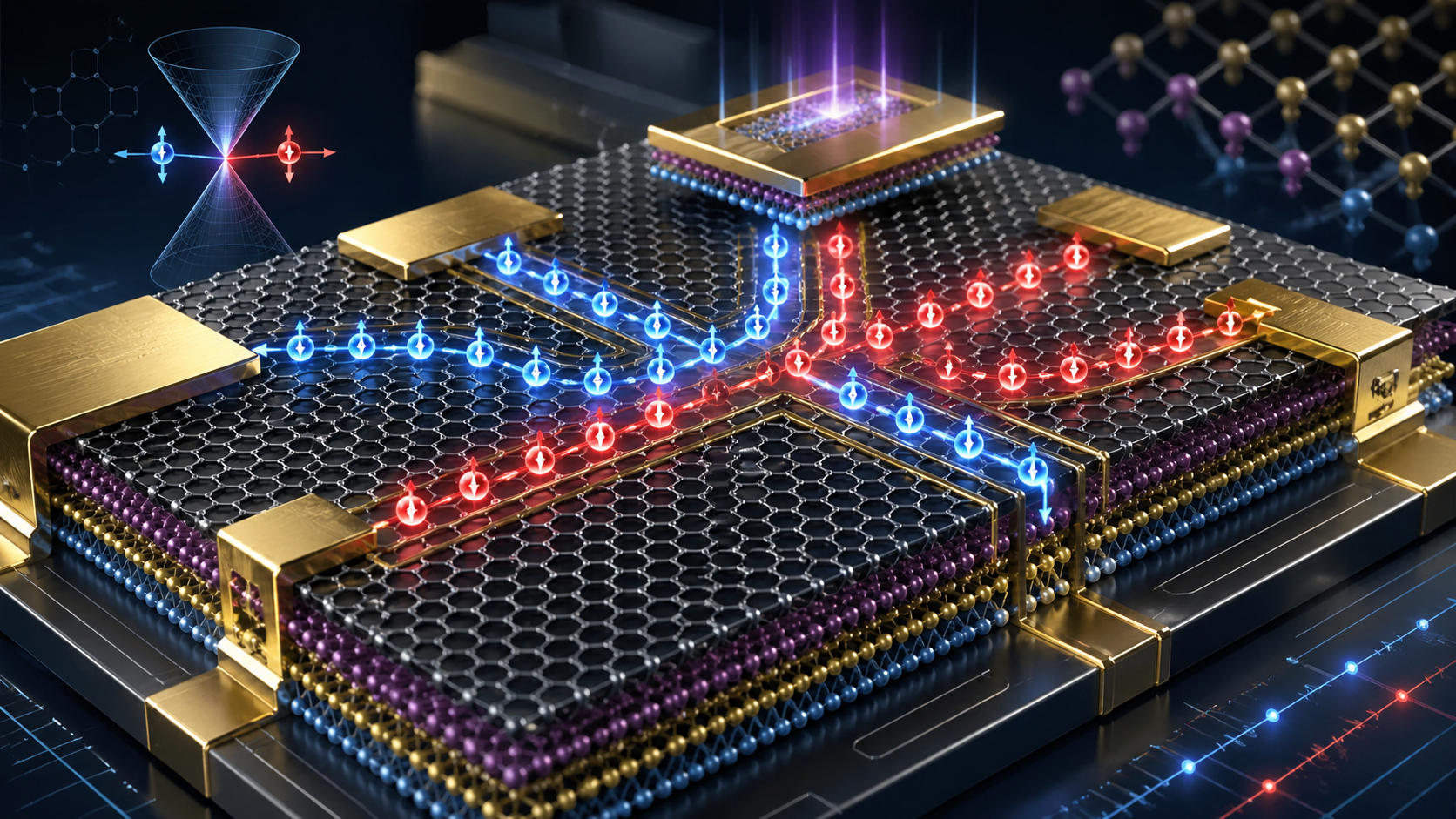
Magnetic graphene and proximity effects
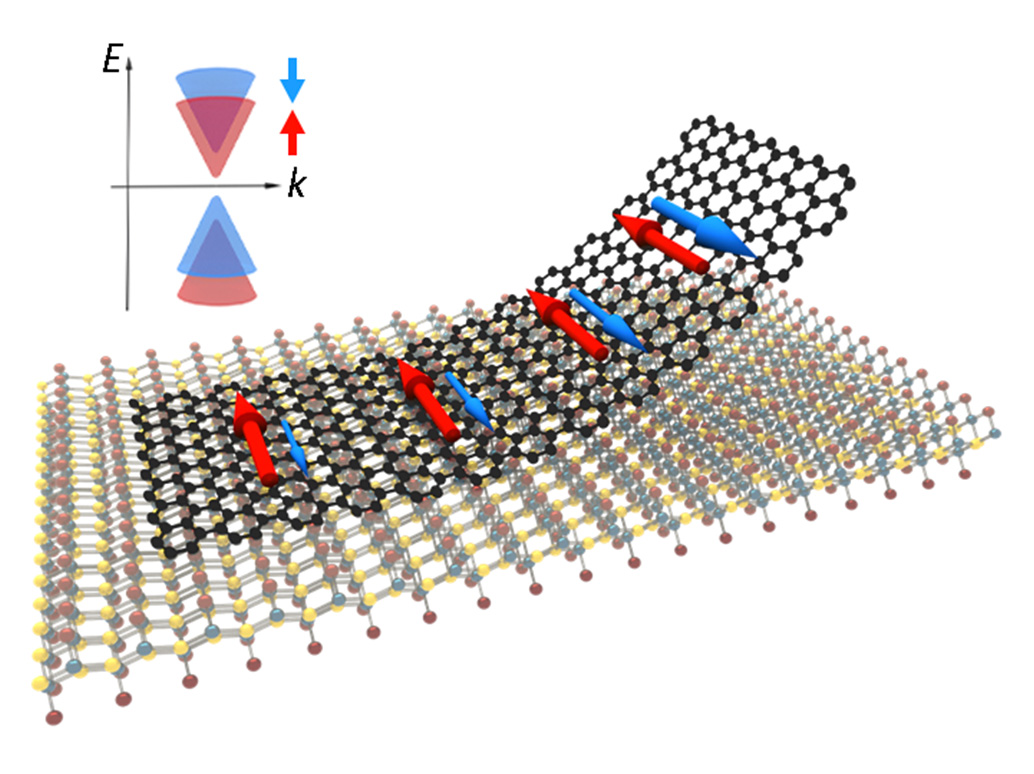
Graphene is an exceptional material for spin transport because of its high electronic quality and weak intrinsic spin-orbit coupling. By placing graphene in contact with magnetic and spin-orbit materials, we can induce new spin-dependent interactions that are otherwise weak or absent in pristine graphene.
In our lab, we study how magnetic exchange, spin-orbit coupling, and electrostatic control can be combined to engineer spin-polarized electronic states in graphene-based van der Waals heterostructures.
Topological spin transport
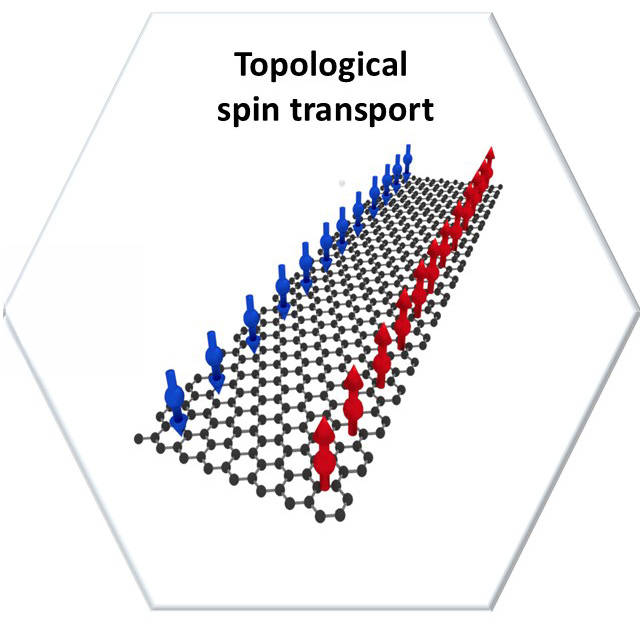 A central direction of our research is the realization and control of topologically protected spin transport. In magnetic graphene heterostructures, proximity-induced interactions can give rise to spin-polarized edge channels that are robust against disorder.
We investigate how these topological states emerge, how they can be controlled by gates and magnetic order, and how they can be integrated into future spintronic and quantum devices.
Hybrid quantum devices
We develop nanoscale devices in which spin, charge, superconductivity, and magnetism interact. These include graphene-based Josephson junctions, spin-orbit-coupled quantum channels, quantum point contacts, and gate-defined nanostructures in van der Waals materials.
By studying these hybrid devices at low temperatures, we aim to uncover new regimes of quantum transport and develop device concepts that exploit the interplay between topology, magnetism, and superconductivity.
Quantum confinements in van der Waals heterostructures
We are also exploring whether graphene-based and magnetic van der Waals heterostructures can provide new routes toward spin qubits. In these systems, proximity-induced exchange and spin-orbit interactions may enable electrically tunable spin splitting and spin-selective readout at low or even zero external magnetic field.This direction connects quantum spintronics with quantum information and computing, aiming to develop new material platforms for scalable quantum devices.
Magnon transport in 2D magnets
 We investigate the electrical, thermal, and radio-frequency generation of spin waves — magnons — in atomically thin magnetic materials. Magnons can carry spin information without requiring a flow of charge, offering a promising route toward low-dissipation spintronic devices. By using 2D magnets, we aim to control magnon transport through thickness, electrostatic gating, magnetic order, and van der Waals stacking, opening new possibilities for tunable nanoscale magnonic circuits.
Experimental approach
Our work combines:
- Van der Waals heterostructure assembly and nanodevice arcitecture design
- Cleanroom nanofabrication
- Cryogenic transport measurements
- Magnetic-field and temperature-dependent experiments
- Analysis and modeling of spin transport and quantum transport experiments
Through these methods, we aim to understand and control spin-dependent quantum phenomena in engineered two-dimensional material systems.